Malaysia Wild Honey | Tualang, Kelulut & Gelam
An Exploration of Malaysia's Wild Bee Honeys


Tualang Honey: Malaysia's Wild Forest Honey
Harvested from the canopies of Malaysia's ancient rainforests, Tualang honey is produced by Apis dorsata, the giant rock bee. These wild colonies build enormous exposed combs high on Tualang trees (Koompassia excelsa), some reaching heights of over 80 metres above the forest floor.
Unlike managed honey bees, Apis dorsata cannot be domesticated. Their honey is gathered from the wild through a traditional harvesting practice that has been passed down through generations.
✧ What Makes It Different
• Seasonal and limited
Tualang honey can only be harvested during specific flowering and honey flow periods, making every harvest dependent on season, weather, and forest conditions.
• Harvested from towering rainforest trees
Traditional honey gatherers, known as orang lebah, climb towering Tualang trees using ropes, smoke, and skills developed through years of experience.
• Naturally multifloral
The bees forage across vast mixed dipterocarp forests, collecting nectar from diverse flowering species. As a result, no two harvests are ever exactly the same.
✧ Cultural Traditions
For generations, Tualang honey has been valued throughout the region and incorporated into traditional wellness practices, restorative foods, and household remedies.
✧ Taste Notes
Deep amber in colour with a rich body, woody undertones, subtle smokiness, and a gently bitter finish often compared to burnt caramel and forest bark.
✧ Enjoy It With
Warm water, herbal infusions, savoury dishes, or simply by the spoonful.
✧ A Honey Shaped by the Forest
Long before it reaches a jar, Tualang honey has already travelled through towering rainforest trees, wild bee colonies, and the hands of experienced harvesters. It remains one of Malaysia's most remarkable wild foods.

Apis dorsata — The Giant Rock Bee


Kelulut Honey : Tiny Bees, Powerful Nectar
Produced by stingless bees (Trigona itama), Kelulut honey is unlike conventional honey. Naturally thinner in texture, brighter in acidity, and lightly fermented, it offers a flavour profile that surprises many first-time tasters.
Unlike honey bees that store honey in wax combs, stingless bees store their honey in small resin-rich cerumen pots. This gives Kelulut honey its distinctive character, often described as tangy, fruity, lightly woody, and complex.
✧ What Makes It Different
• Naturally fermented
Kelulut honey undergoes natural fermentation within the hive, contributing to its lively acidity and unique flavour.
• Stored in resin pots
The bees construct storage pots using a mixture of wax and plant resins, which can impart subtle resinous and woody notes.
• Produced by stingless bees
Trigona itama bees do not sting and play an important role in pollinating native plants and crops.
• Rich hive environment
Kelulut honey naturally contains compounds derived from honey, propolis, pollen, and the diverse microbial ecosystem of the hive.
✧ Cultural Traditions
Across parts of Malaysia, Kelulut honey has long been valued as a traditional food and is often incorporated into daily wellness practices. It is commonly enjoyed on its own, mixed into drinks, or taken as part of postnatal and restorative routines.
✧ Taste Notes
Bright acidity. Fruity tang. Gentle fermentation. Notes reminiscent of tropical fruit, citrus, and light floral vinegar.
✧ Enjoy It With
Sparkling water, citrus, yoghurt, fresh fruit, salad dressings, or simply by the spoonful.
✧ A Honey Unlike Any Other
Kelulut honey challenges the expectation that honey should only be sweet. Its balance of sweetness, acidity, and fermentation makes it one of the most distinctive honey styles found in Malaysia.


Gelam Honey: The Coastal Forest Honey
Harvested from the wetlands, mangroves, and coastal forests of Malaysia, Gelam honey is produced from the blossoms of Melaleuca cajuputi, locally known as pokok gelam.
For generations, the Gelam tree has been valued throughout the region for its aromatic oils and traditional uses. When the trees flower, bees gather nectar from thousands of pale blossoms, producing a honey with a distinctive herbal character unlike any other Malaysian variety.
✧ What Makes It Different
• Sourced from Melaleuca blossoms
The nectar comes primarily from Gelam trees that thrive in coastal and wetland environments.
• Distinctive aromatic profile
Gelam honey is known for its fragrant aroma, herbal notes, and gentle bitterness.
• Naturally rich in plant compounds
The honey reflects the botanical character of the Melaleuca tree, contributing to its unique flavour and aroma.
• A honey for those who enjoy complexity
Unlike sweeter floral honeys, Gelam offers a more savoury, herbaceous profile that appeals to adventurous palates.
✧ Cultural Traditions
Both the Gelam tree and its honey have long been incorporated into traditional practices throughout Malaysia's coastal communities. The tree itself has been used in household remedies, aromatic preparations, and wellness rituals for generations.
✧ Taste Notes
Bright amber in colour with herbal aromas, gentle bitterness, woody undertones, and a lingering floral finish.
✧ Enjoy It With
Warm water, herbal teas, citrus, savoury dishes, or enjoyed on its own to appreciate its distinctive character.
✧ A Honey Shaped by the Coast
While rainforest honeys reflect towering forests and mountain canopies, Gelam honey tells a different story, one of wetlands, coastal winds, flowering Melaleuca trees, and the landscapes where land and sea meet.
Our Wild Honey Spectrum
-
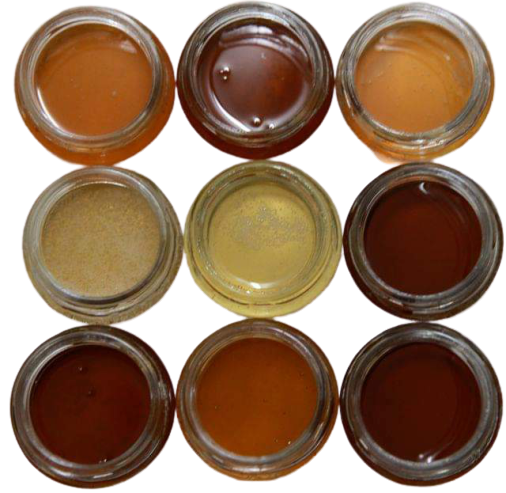
Pictured above: Our collection of Kelulut and Tualang honeys.
No two jars look exactly alike.
Honey naturally varies in colour, aroma, texture, and flavour depending on floral sources, season, weather conditions, and harvest period. Some harvests appear light golden, while others develop deep amber tones. Kelulut honey may show signs of natural fermentation, while Tualang honey can vary significantly from one flowering season to the next.
These differences are not flaws. They are part of what makes wild honey so fascinating.
Every jar reflects a particular harvest, a particular moment in nature, and a set of conditions that can never be repeated in exactly the same way.

With the Bees in Mind: Our Mindful Harvesting
Good honey begins with healthy bees.
At Eat Honey Pretty, we work with harvesters and beekeepers who understand that honey can only be gathered sustainably when the wellbeing of the colony comes first.
For wild honey, this means leaving enough comb for bees to rebuild and continue their natural cycle. For stingless bee honey, it means careful hive management that supports colony health, pollination, and long-term productivity.
We believe harvesting should never come at the expense of the bees that make it possible.
Every jar reflects a relationship between bee, flower, landscape, and human stewardship. Our role is not to control that process, but to respect it.
Because when bees thrive, everything else follows.


Crystallization and storage
If stored and maintained properly, honey will stay good indefinitely. Do not refrigerate. Store at room temperature (70-80 degrees °F) in a dark place to help retain its flavor, aroma, and consistency. Make sure the container remains sealed tightly. Keep clean by using a dry spoon each time you dip into the jar. This premium honey is raw, unprocessed, and unpasteurized. Therefore, it retains all the naturally occurring bioactive properties. It may become cloudy, but don’t worry! It’s still good! This is a totally normal process called “crystallization”. The superior quality remains intact and is perfectly safe to consume. If honey consistency becomes hard, don’t microwave it. Simply place jar in warm (not boiling) water and stir to soften.
From Jungle Gold to Everyday Sweet: A Comparative Table
